Impressionists Who Rowed
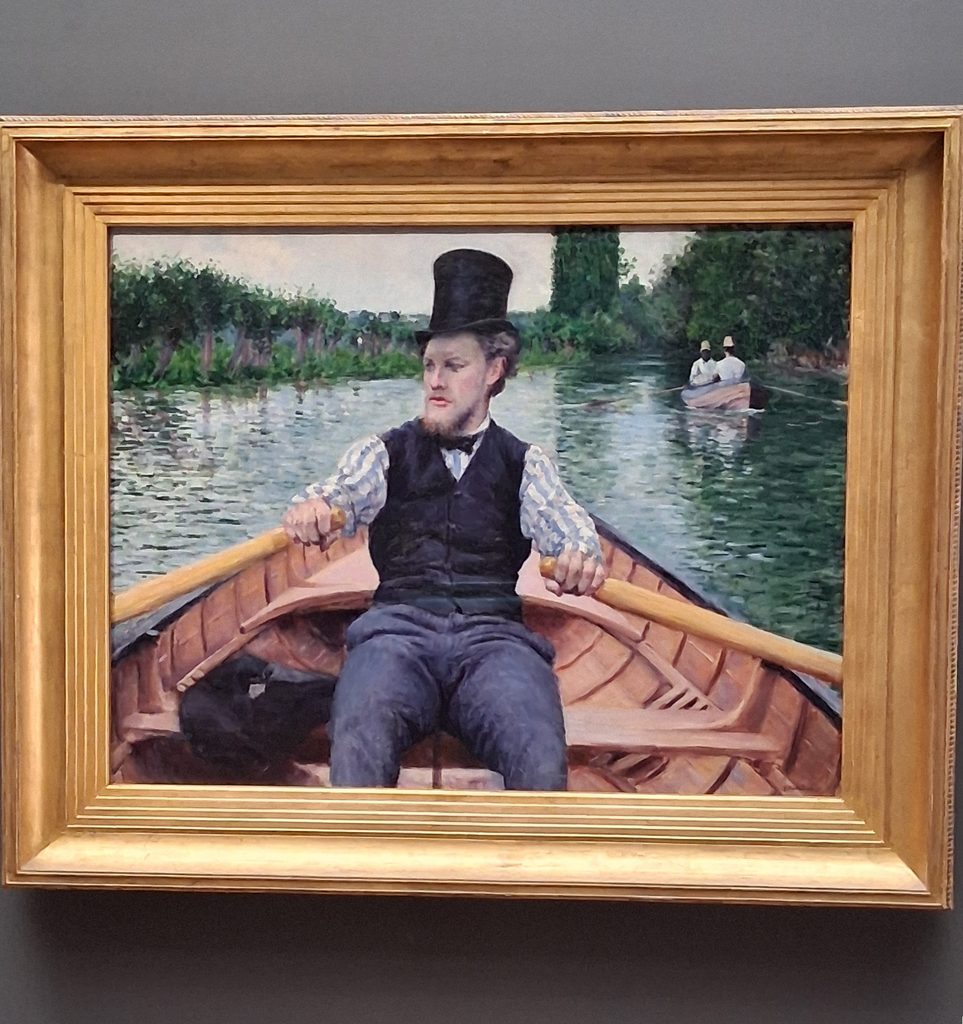
He is rowing in a top hat. And in a waistcoat and a bowtie. He is pulling, opening up his back, legs slightly bent but braced. His shoulders mirror the pull, his arms straight but not stiff. The handles of the thick, wooden oars are at different heights. He fully grips them. He looks to his right, mouth every so slightly agape, his jaw slightly skewed like he has just pushed out a deep breath. He rows a wooden, fixed seat boat, like a wherry or a Thames skiff, his jacket crumbled on the seat beside him.
This picture by Gustave Caillebotte, titled Partie de bateau, dit Canotier au chapeau haut de forme was painted between 1877 and 1878. The title translates to Boating Party or Rower in a Top Hat. When I first read the title in French I wondered if Caillebotte was referring to the rower’s technique, which looked pretty good. Caillebotte was an Impressionist who rowed. He would know.
The painting fills a wall in the Musée d’Orsay in Paris. A bench, directly in front, puts you at the height of the rower. You are in the boat. Feel the rhythm of his stroke, hear the puff of his breath, the splash of the blades into the water.
Rowers glide through other Impressionists paintings. See them in works by Claude Monet, Pierre-Auguste Renoir and Georges Seurat. The latter’s most famous pointillist paintings, dots of colour, of La Grande Jatte (Art Institute of Chicago) and Bathers at Asnières (National Gallery London) are filled with people on the banks of the Seine River in Paris, but in the background float quads, a single and some kind of boat rowed standing up. Only Caillebotte puts us in the boat. Not even Alfred Sisley, who created many scenes of regattas during his time in England.
Caillebotte has another painting of rowers in action on the Yerre River, held in a private collection. The view is also from someone in the boat, perhaps standing up. Two sweep rowers pull on their oars, heads down, faces not visible. They wear matching rounded straw hats with a narrow brim, white t-shirts and loose blue work pants. They sit poised at the catch.
It is a painting by Renoir that has drawn me to Paris, where I sat with Caillebotte’s rower in a top hat. Plus four other Impressionist scenes of the Seine and Oise Rivers near Paris. Five small copies of these famous paintings hang on my walls in Winnipeg. For almost two years I have been writing a book about my father’s retirement hobby and the journeys that some of the paintings take me on. Woven into the stories of art and travel are memories of rowing, reflections on my upbringing and a celebration of nature and time outdoors.
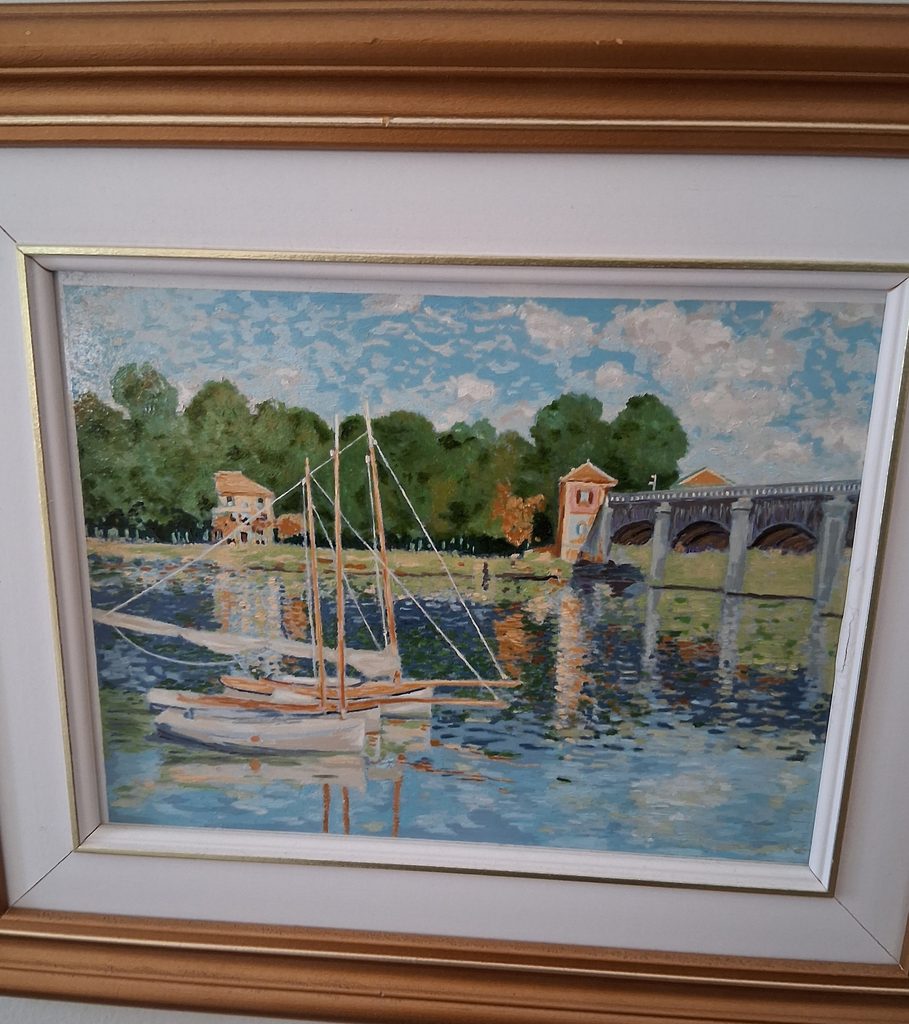
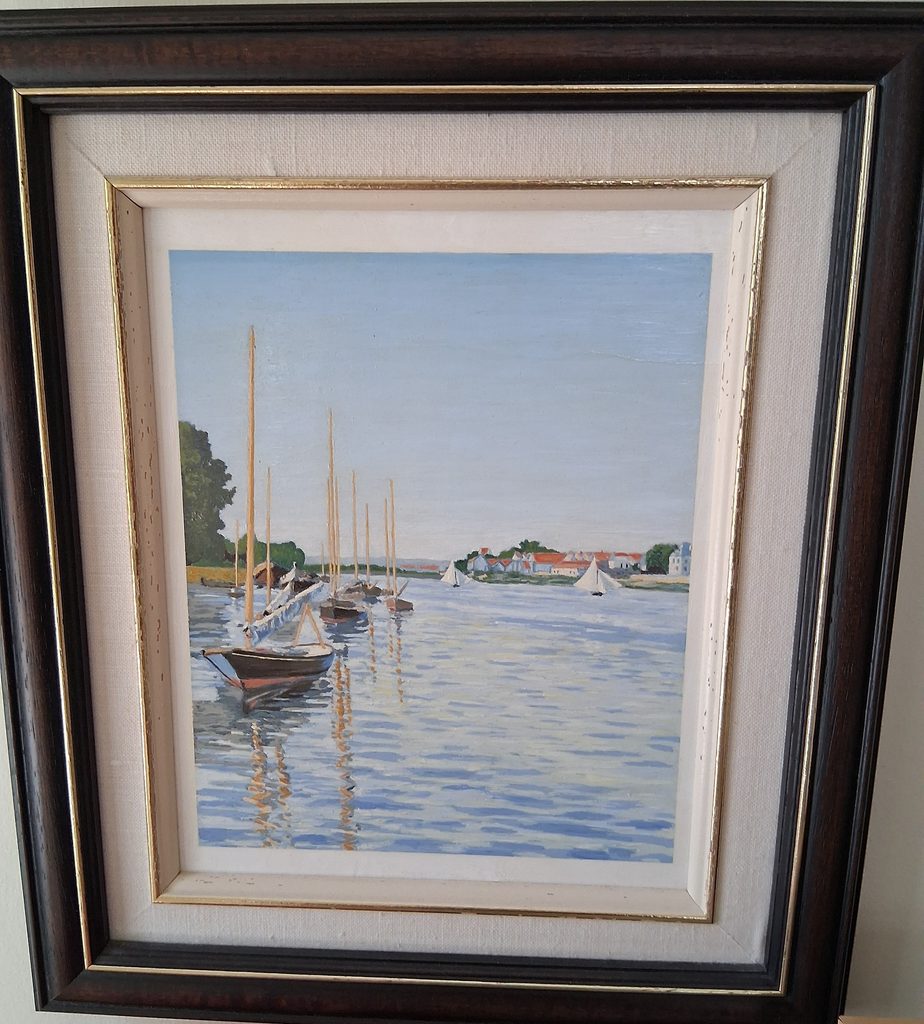
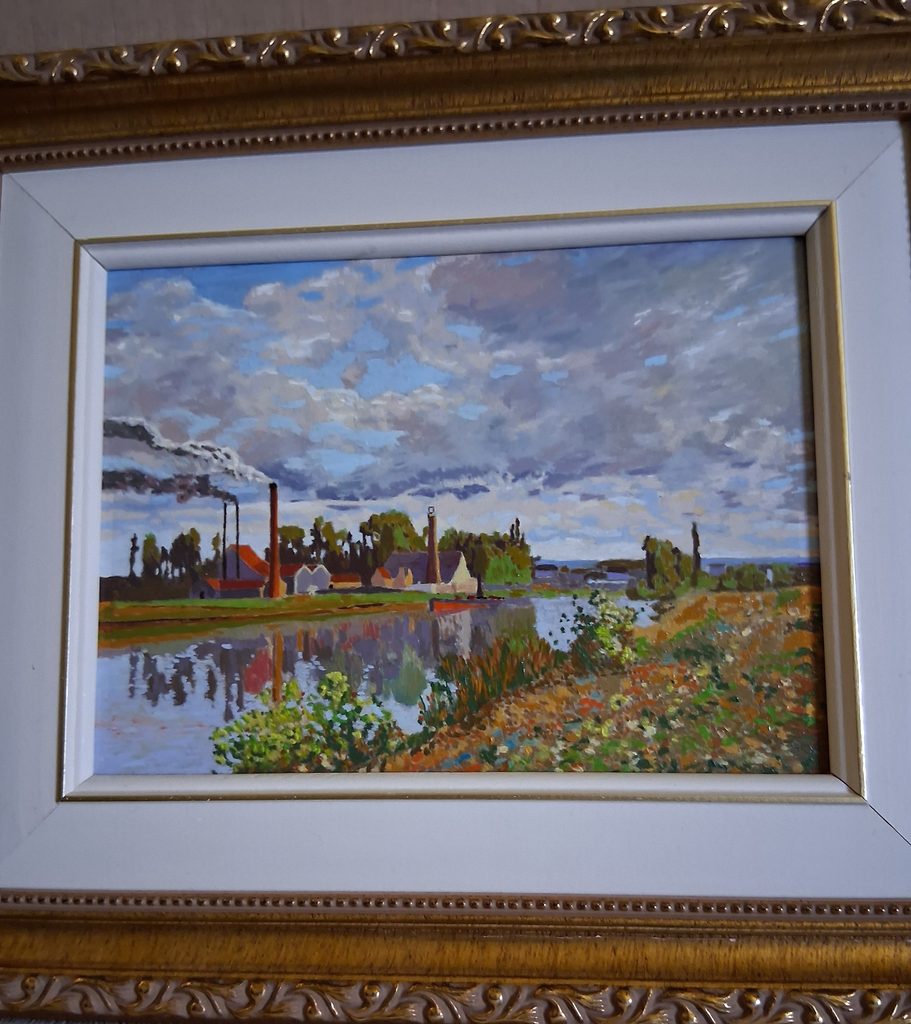
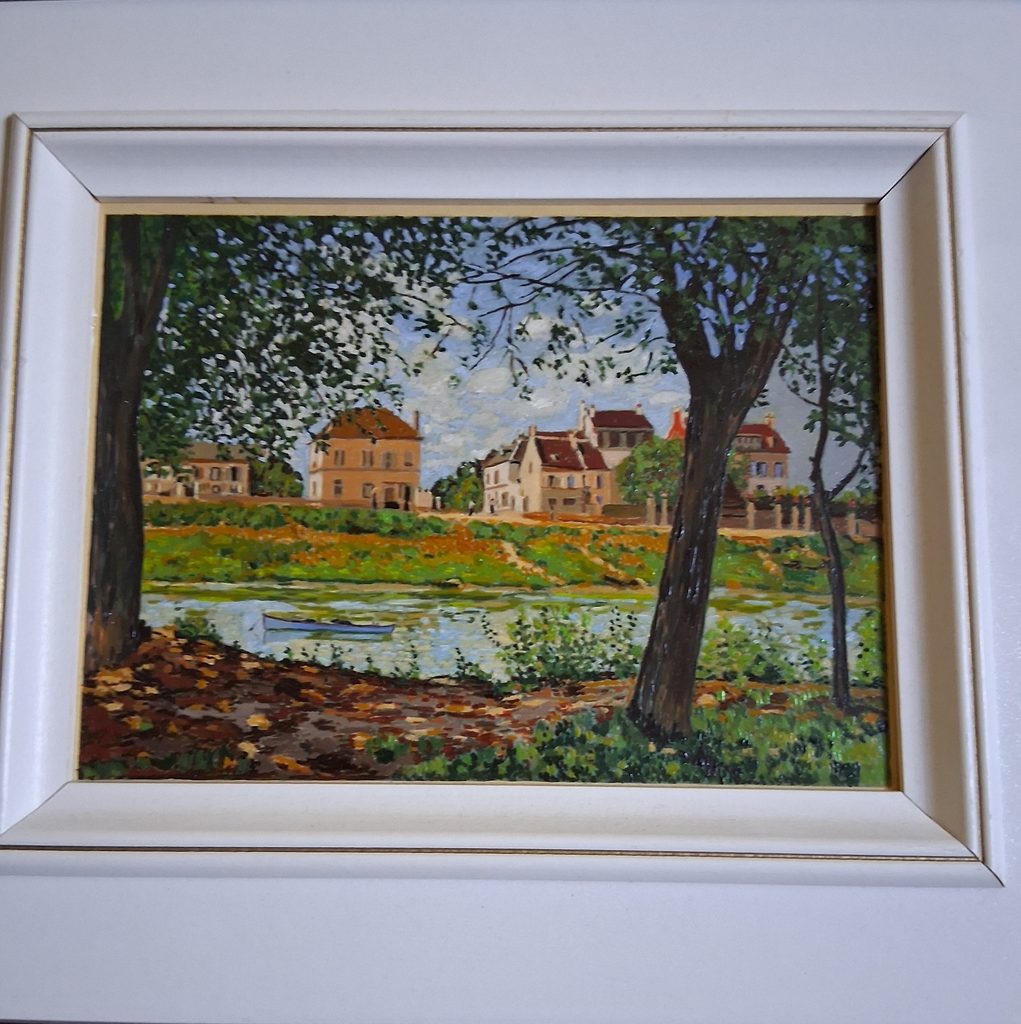
I spent hours walking the banks of the Seine and Oise Rivers, finding the locations where the paintings were made en plein air – painting outside the studio. Of course what I saw bore no resemblance to what the Impressionists depicted, but it gave me a chance to reflect on the rows that I have enjoyed in Paris and the ultimately unsuccessful efforts to create a rowing tour on the Seine.
First, I tried to create a tour beginning in Paris and ending in Rouen. Not as a continuous row. Even with options for trailering, the locks that would need negotiating or avoiding became too great a barrier. I then investigated the Seine downstream of Rouen where there were no more locks. The powerful tides and currents and challenges to find guides and equipment put an end to those plans.
It all led me, while on this trip in Paris, to ponder flow, movement, change. How much I love water. How much I love rowing and how fortunate I am to have rowed in so many beautiful places with wonderful people.
Of my five paintings, my small copies, there is one where you can still glimpse the Paris of the time of the Impressionists. The extension of train lines to the west of the city in the late 1800s offered the opportunity for wealthy Parisiens to leave the city on a day trip. Guinguettes popped up on the long, slim islands of the Seine, leafy havens for dining, dancing, boating and swimming.
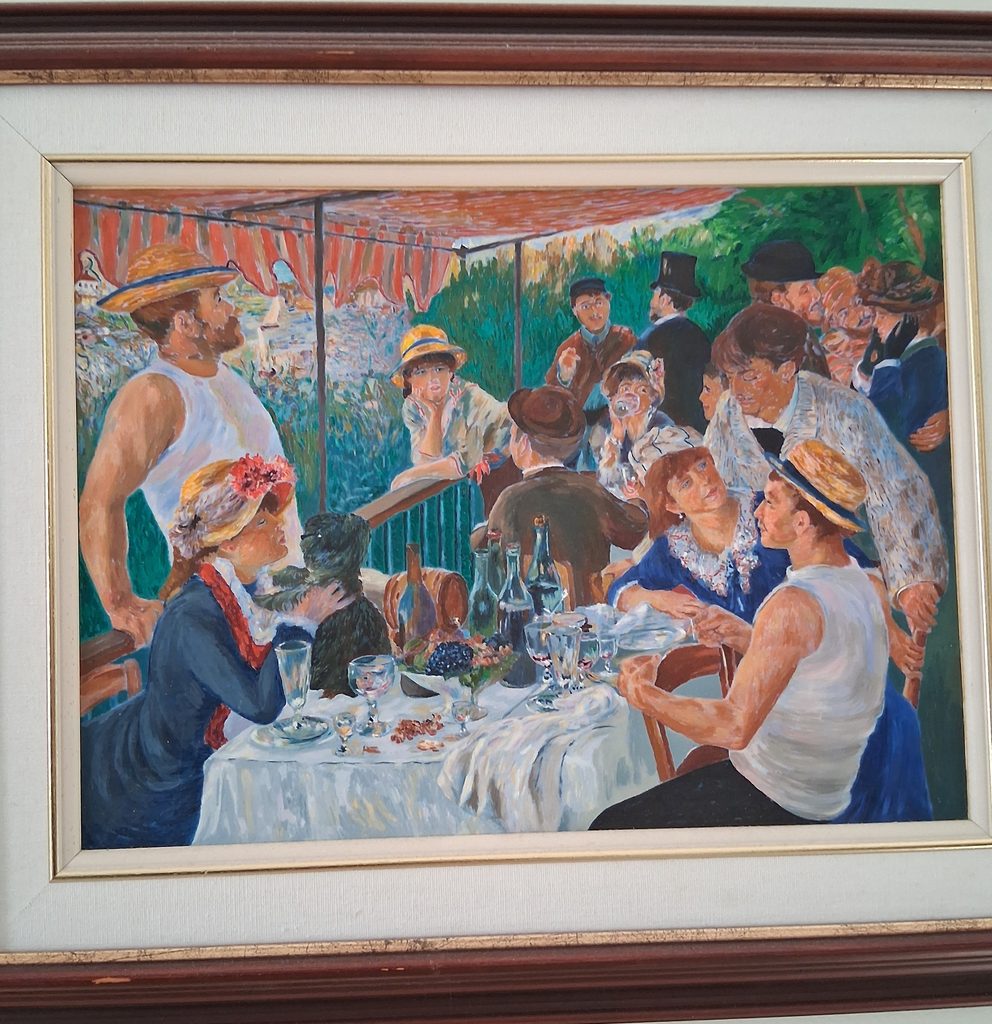
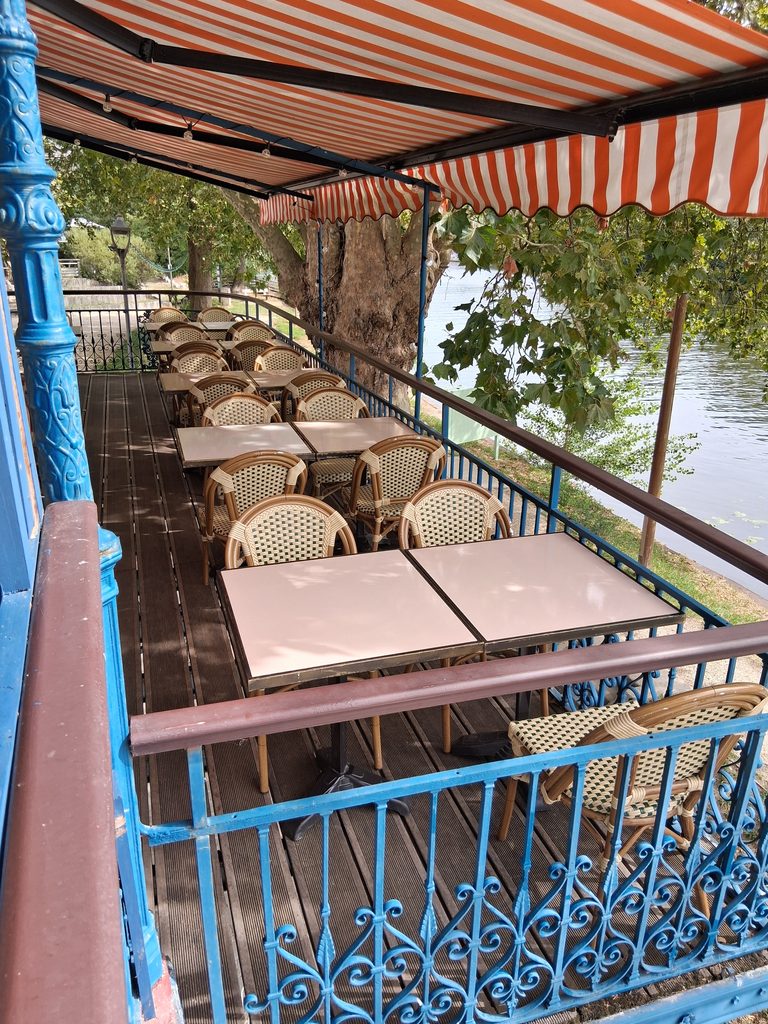
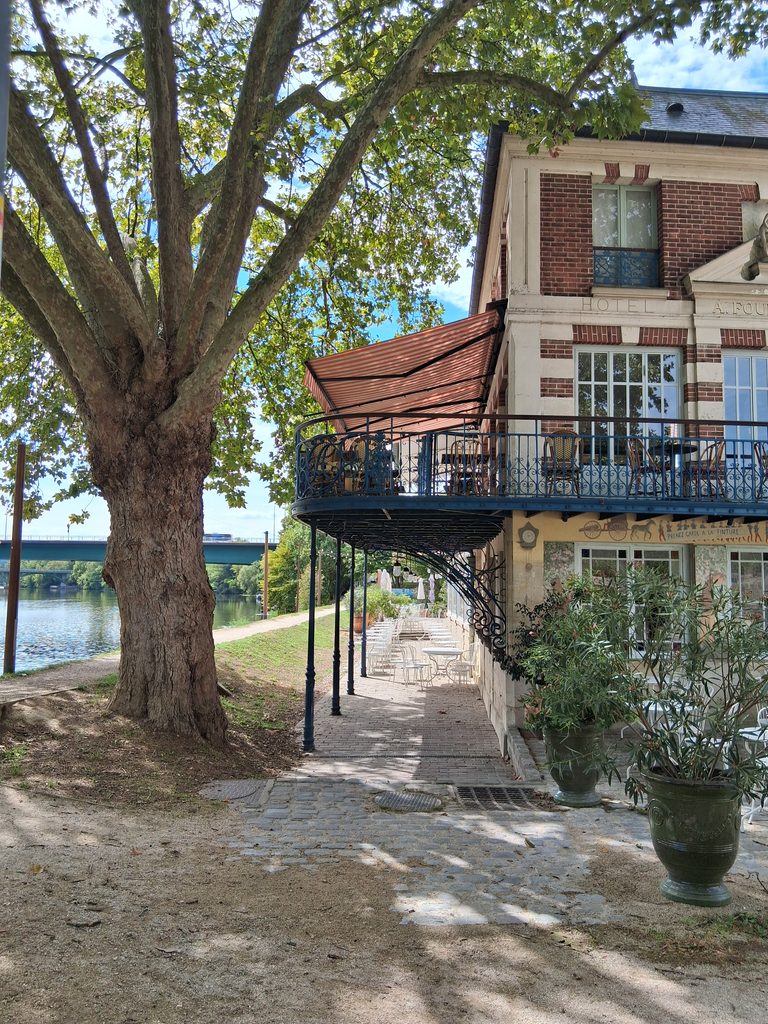
Renoir’s Luncheon of the Boating Party (Phillips Collection) does not depict people rowing, but there are men in white singlets and jaunty straw boaters’ hats. And a few in top hats. The scene is the balcony at La Fournaise, a restaurant on a narrow island between Chatou and Reuil-Malmaison. The restaurant still exists.
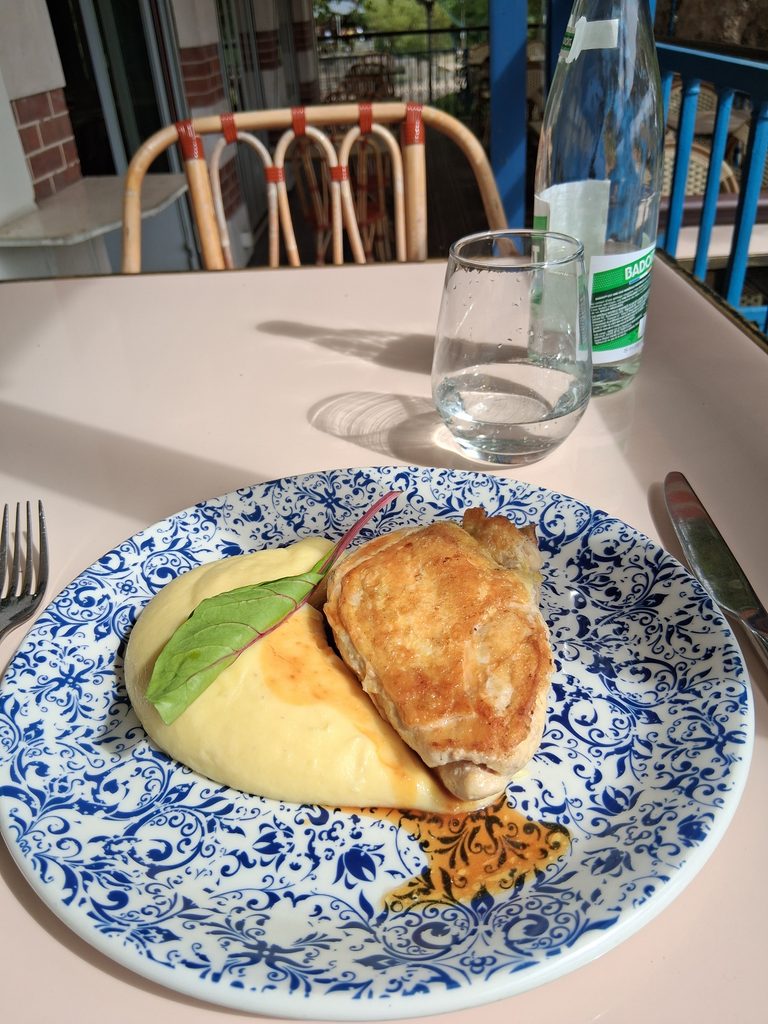
Sitting in the lunchtime sun at La Fournaise, enjoying suprême de volaille with a glass of sparkling white wine, watching the red and white stripped awning flap and snap in the breeze, listening to the murmur of conversation and laughter at the other tables, I feel that I am almost in the painting. And that any moment now, a man in a top hat, sculling a fixed seat wooden boat, will splash and glide past.